The Sierra Madre Occidental has some of the richest biodiversity anywhere in North America, and contains about two thirds of the standing timber in Mexico.
Twenty-three different species of pine and about 200 species of oak are found in the Sierra Madre Occidental pine-oak forests ecoregion.
Many distinctive species have evolved here as a result of the landforms, altitude, temperature and rainfall. However, over harvesting of the forests in this area since the early part of this century has caused the extinction of the imperial woodpecker (the largest woodpecker on Earth) and has lead to the likelihood of several other species becoming extinct in this ecoregion, such as the Mexican gray wolf. Currently, all but 300,000 acres, or about 2 percent, of the original old-growth forest is gone. Location and General Description
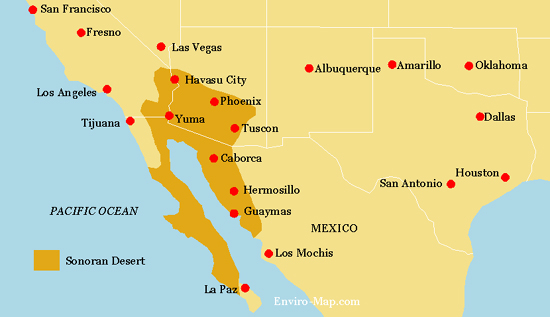
This ecoregion occurs along the Sierra Madre Occidental, a rugged mountain range running from Rio Grande de Santiago, in the state of Jalisco, Mexico, north through the Mexican states of Sonora and Chihuahua, and into southern Texas and the Madrean Sky Islands of coniferous forests.
WEATHER IN SIERRA MADRE OCCIDENTAL
The climate varies considerably between the northern and southern extents of this long mountain range. Seasonal variations also occur due to the presence of large bodies of warm water delivering warm damp air from each side of the range. This region undergoes a seasonal variety with two wet seasons, including a summer monsoon, and two dry seasons each year.
PLANTS
Flora
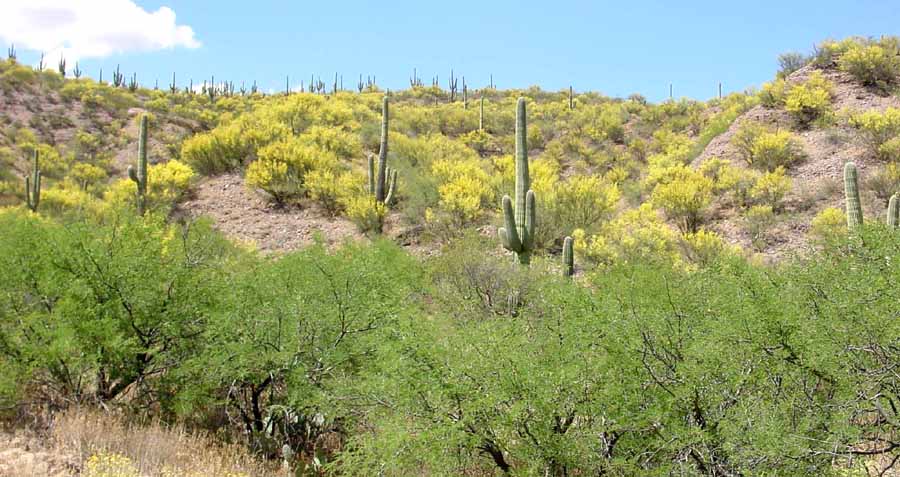
The dominant plants vary across the range, and the habitat that they present varies from scattered woodland to both deciduous and coniferous forest.At higher elevations pines begin to grow alongside the oaks, and pines begin to dominate the oaks at higher elevations.[80] At high elevations and in the north Mixed Conifer Forests become the dominate ecosystem. These forests are composed primarily of pines and firs, which begin to grow at these elevations.[81] There are also grasslands on some mountain tops, surrounded by the forest that occur in those areas.[80]
ANIMALS
Fauna
The mountains are often a corridor for species allowing more diversity in the area, by combining species from different regions. Animals typically associated with arid and mountainous habitats share the mountains with species associated with habitats further south.[83]There are many carnivorous and omnivorous mammals native to the area, although several are extirpated or are part of threatened populations. The Mexican wolf's range in the mountains is limited to the foothills of Durango[84] or may have been extirpated[85] the black bear population is small,[84] and the Mexican grizzly bear is confirmed extinct.[86] Jaguar and Ocelot are also now rare.[84] On the other hand, Mountain lion and bobcat are more common.[87] On the eastern slopes there are American badger and Coyote and gray fox live across the mountains.[85]
Native ungulates include the white tailed deer,[84] mule deer, and collared peccary.[85] Rodents and lagomorphs include the eastern cottontail, which lives in the forests of the western slopes,[88] cliff chipmunk, rock squirrel, Mexican fox squirrel, and various species of Cricetidae.[89] Raccoons, hog-nosed skunk, and hooded skunk live in the mountains. The white-nosed coati lives on the western slopes, and the ring-tailed cat lives throughout. Many species of bats live in the mountains also.[85]
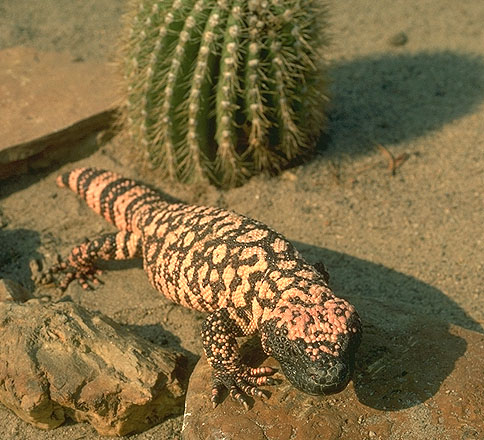
A variety of lizards live in the area and surroundings. The Tarahumara frog lives in the oak and pine stands preferring moving water to pools. The southern extent of the Sonoran mountain kingsnake's range is the Chihuahuan desert into the mountains. Other snakes and frogs live in the mountains, and many species live in the western slopes.[90]