Types
There are four major types of deserts, hot and dry, semi-arid, coastal, and cold.
Hot and dry deserts are very warm or hot throughout the year with very little rainfall. Plants usually consist of woody trees and ground shrubs. Native animals are generally nocturnal coming out at night when the temperatures are cooler.
Semi-arid deserts are generally warm with low amounts of rainfall. Native plants such as cacti are found in these areas as well as lizards and small mammals.
Coastal deserts host a moderately cool to warm environment suitable for fleshy plants, amphibians and various mammals.
Cold deserts are found in areas such as Antarctica and Greenland. Plants such as those with spiny leaves and mammals suitable for the environment exist in such desert areas.
HOW DESERTS ARE FORMED
Deserts are formed when rain clouds run into wind or mountains and drop rain in one area, leaving the land further away dry.Deserts that form near bodies of water are usually caused by winds. For example, the Sahara desert, near the Mediterranean.
Deserts near mountains are formed when rain clouds drop their rain on one side, and the land on the other side of the mountains stays dry. For example, rain clouds sail over India and meet the Himalayas, dropping their rain on India and forming the Gobi desert on the other side of these mountains.
Hot deserts
Hot deserts are hot during the day, all year round, with temperatures above 40oC (104oF). Nights are cold, with temperatures below 10oC (50oF), and sometimes below freezing point.Some Hot deserts are:
- Sahara
- Kalahari
- Arabian
- Iranian
- Atacama
- Australian
- Sonoran
- Mojave
- Californian.
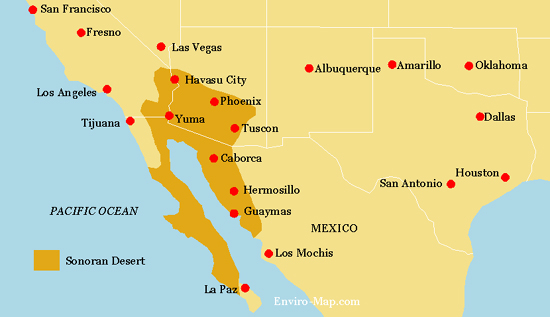
WHAT PLANTS GROW IN THE SONORAN DESERT?
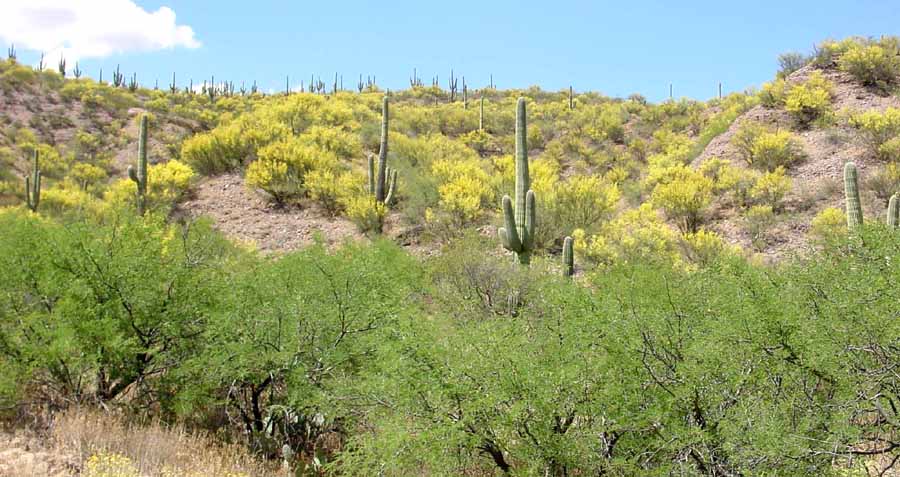
The plants in the Sonoran desert are very interesting, such as fairy duster, jimson weed (poisonous), tumble weed, night blooming cereus, devils claw, ghost flower, hedgehog cactus and showy four o clock.
There are some other plants with out really interesting names: The desert Christmas cactus, prickly pear cactus, desert willow, western wildflower, cave primrose and desert lupine. These desert plants adapt to their climate by seeking coolness. Their roots collect water when it rains.
The saguaro cactus has shallow root systems allowing the cactus to store up to 160 liters of rainwater allowing it to live for weeks at a time without water. The other adaptations of the desert plants are that they live in the mountains where shade and coolness is found.
WHAT ANIMALS LIVE IN SONORAN DESERT?
The Sonoran Desert animals fit in to the environment perfectly. Some of the animals in the desert are
the Mexican gray wolf (el lobo), the mountain lion (cougar or puma), the great horned owl (Bubo virinus), the golden eagle (Aquila chrysaetos) and the rattlesnake.
The Sonoran desert is also the home to the Mexican jumping beans. Mexican jumping beans are fruits of a shrub. The movement of the moth larva in the bean makes them jump.
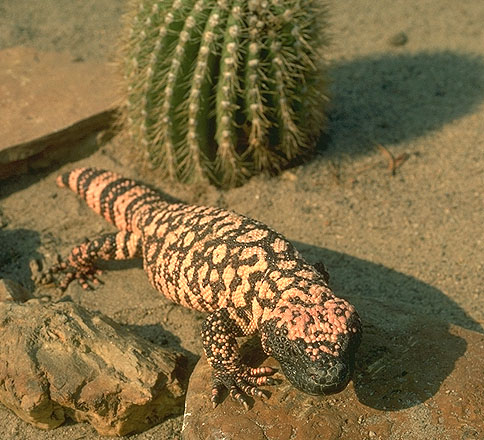
The adaptations of the desert animals to the desert home are quit simple. The animals or reptiles can find little hideouts were the sun cannot get to them. Other animals live in the mountains were coolness and shade is found with green forests but the animals have another talent. They sleep in the daytime and the heat does not bother them. Most of the animals are nocturnal, which means they hunt at night when no heat of the day is found.

No comments:
Post a Comment